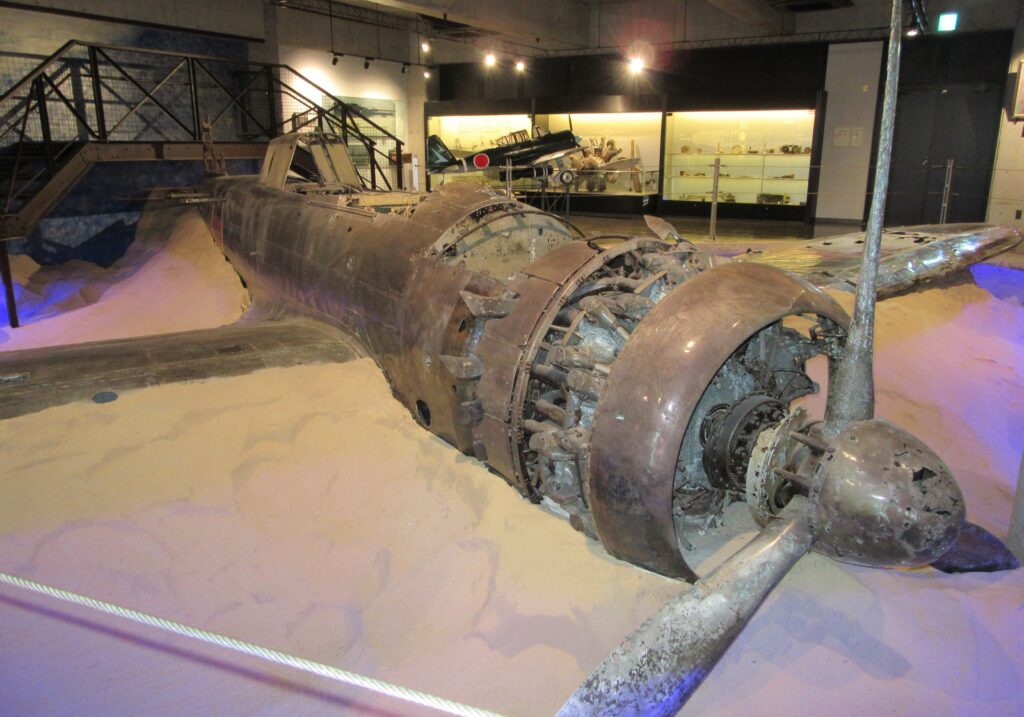
The Bansei Peace Memorial Museum exhibits the portraits, final letters, and personal belongings of those who served in Operation TENGO (the Okinawa Air Operations) —including members of the Special Attack Units, the 66th and 55th Flying Squadrons, the 19th Air Communications Regiment, and the Navy’s First Kamikaze Special Attack Unit.
Our mission is to provide a place where visitors can learn historical facts and to deeply reflect on “the preciousness and the importance of peace". Through these records and video materials, we strive to convey this message to all generations, hoping it resonates with every visitor’s prayer for peace.
Exterior Architecture
The building is modeled after the Type 95 Model 1 Biplane Trainer (affectionately known as the "Red Dragonfly"), an aircraft admired by young flight trainees of the era. The roof’s vertical tail-fin shape symbolizes gassho—the act of joining one’s hands in prayer —symbolizing prayers offered morning and evening.
Origin of the Logo
The logo combines the Gassho motif from the building's roof with the image of an aircraft soaring into the sky, symbolizing hope and aspiration. The expanding curved lines at the base represent a wish for "peace to be ever-widening" and eternal, embodying our collective prayers for a world without conflict.

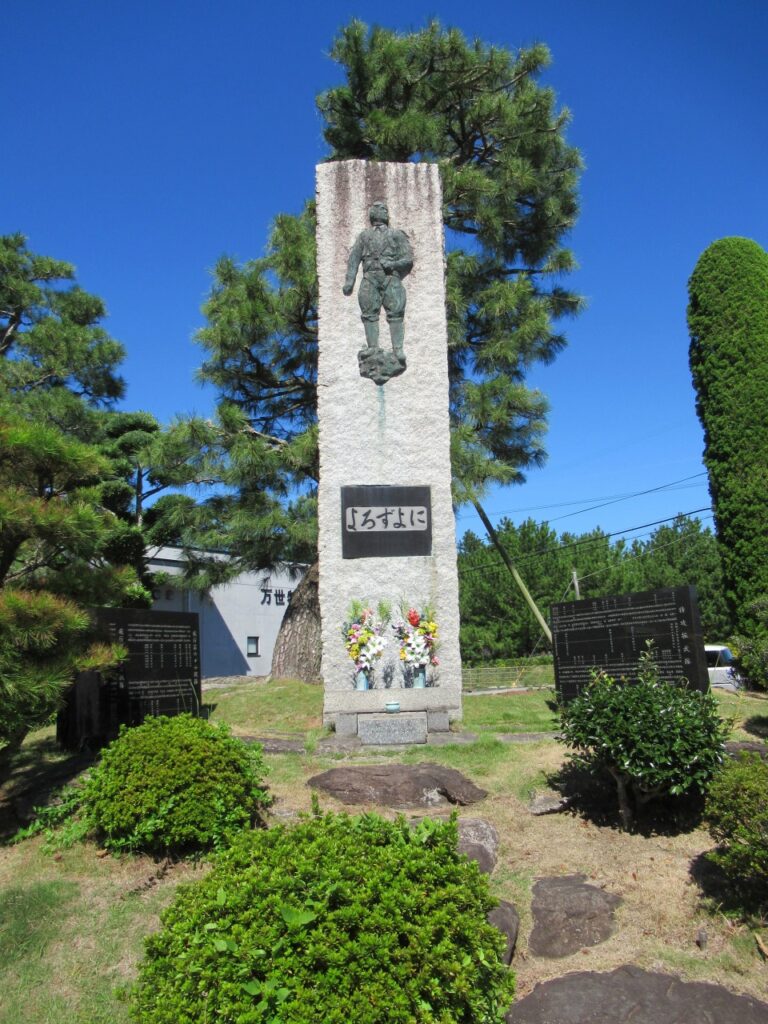
Yorozuyo-Ni Monument
The name of the former town, "Bansei," can also be read as "Yorozuyo" (meaning "ten thousand generations" or "eternity"). By adding the particle "ni," the name "Yorozuyo-ni" is drawn from the Nihon Shoki (The Chronicles of Japan), signifying a wish for peace to endure forever. The bronze reliefs of the fallen aviators face east for two reasons:
A Promise to Reunite: Many pilots departed with a promise to their comrades and families to "meet again under the cherry blossoms of Kudan." Thus, they face the direction of the Kudan district in Tokyo, where the Yasukuni Shrine and its cherry blossoms are located.
Looking Toward Home: The 201 fallen soldiers came from all across Japan. Looking east from Bansei encompasses the directions of Hokkaido, Honshu, Shikoku, and Kyushu. The monument is positioned so the fallen may always look toward their hometowns where their parents and siblings live.
The sub-monuments on either side bear the names and dates of passed away of the 201 individuals: 121 from the Special Attack Units on the right, and 72 from the 66th Flying Squadron, 6 from the 55th Flying Squadron, 1 from the 19th Air Communications Regiment, and 1 from the Navy’s First Kamikaze Special Attack Unit (Seito-tai) on the left.
Annual Memorial Ceremony
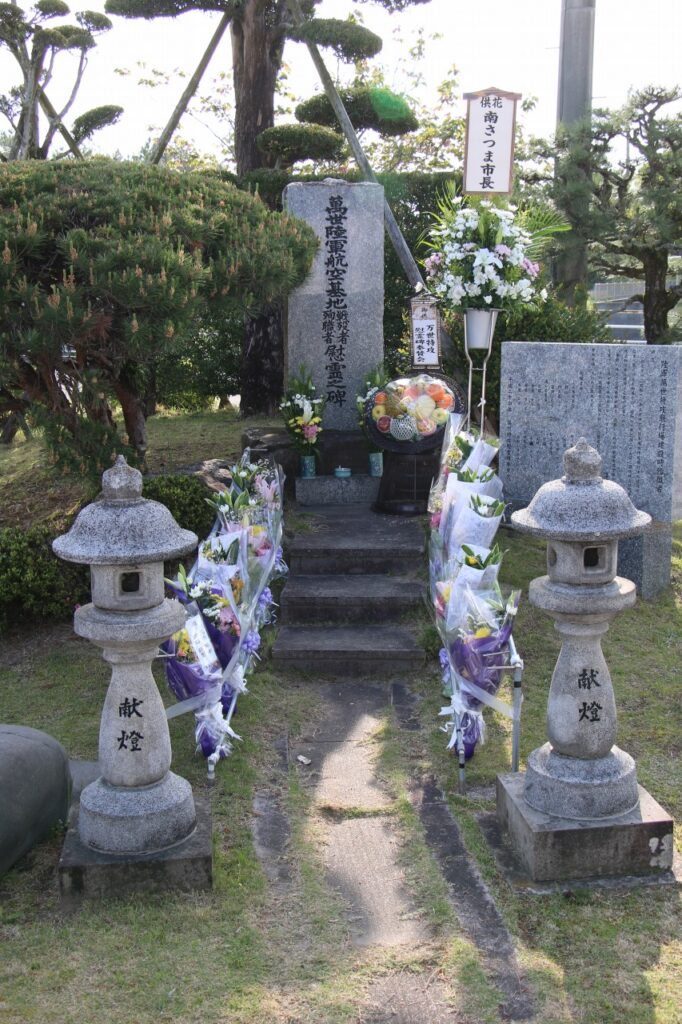
Held annually on the second Sunday of April (or the fourth Sunday during years with unified local elections). The "Yorozuyo-ni" Monument is adorned with flowers offered by bereaved families from across the nation. In a solemn ceremony, families, guests, and the public gather to pray for the peaceful repose of the fallen.
Monument for the Fallen (Civilian Victims)
Established in 2012, this monument commemorates the members of the Kinpo Town National Defense Women’s Corps. On March 29, 1945, while engaged in labor service, they sought refuge from a sudden air raid in a shelter near the Shinkawa River radio tower. A bomb struck the shelter directly, killing 19 people, including small children. This monument was erected to console the spirits of these women who, like the aviators, lost their lives during the war.
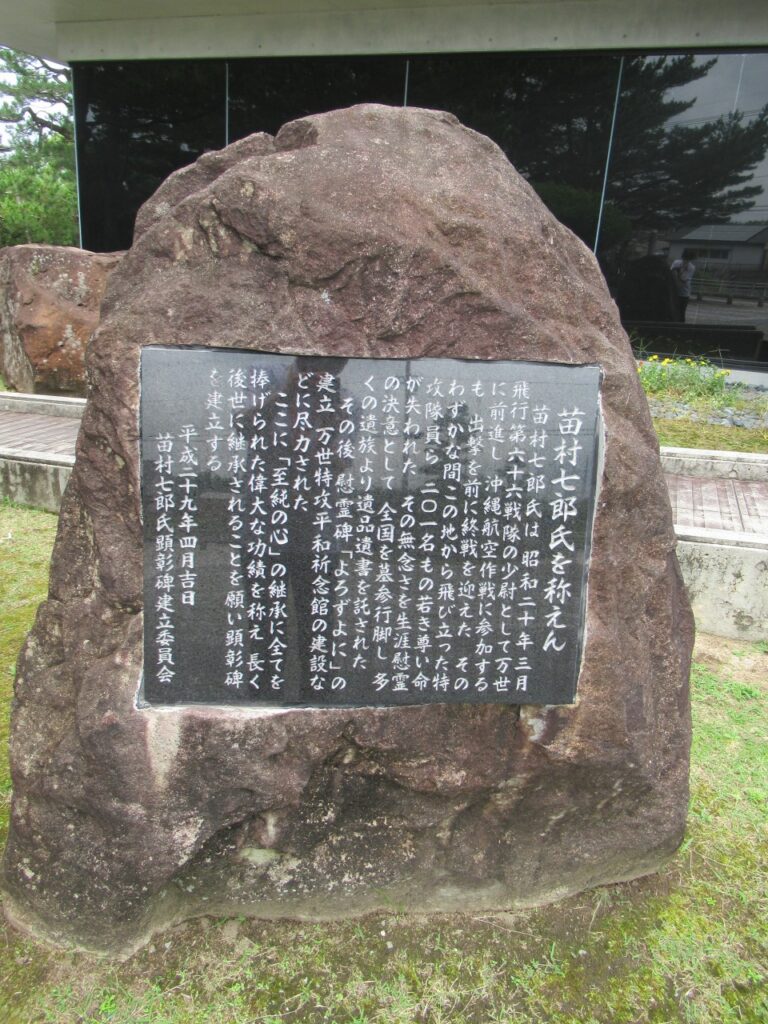
Memorial Monument for Mr. Shichiro Naemura
This monument honors Shichiro Naemura, who participated in the Okinawa Air Operations as a Second Lieutenant of the 66th Flying Squadron and later laid the foundation for the memorials at Bansei. Mr. Naemura traveled across Japan at his own expense to collect the final letters and personal effects entrusted to him by the bereaved families. He was instrumental in the founding of this museum.